Though it’s emblazoned on our state flag, the last California grizzly bear died more than a century ago. Now, a group of Democratic lawmakers wants to consider bringing back the species in the state — despite misgivings from communities that would be the most vulnerable to bear attacks if they return.
As CalMatters’ Ryan Sabalow explains, California was home to as many as 10,000 grizzly bears before the Gold Rush. But systematic extermination by settlers wiped out the species in the state.
After passing through the state Senate, a bill before the Assembly would direct the state’s Department of Fish and Wildlife to examine the feasibility of reintroducing the apex predator. Tribes, environmentalists and animal welfare organizations support the bill, arguing that the bears improve the ecosystem and reintroducing them would right an ecological wrong.
- Tiana Williams-Claussen, director of the Yurok Tribe’s wildlife department: “I can see the ways in which my homeland has suffered from the loss of iconic species such as the grizzly, and that this loss lingers in our heart and in the attenuation of a millennia-old relationship.”
The bill’s Democratic author and coauthors represent predominantly urban districts in Southern California — a sharp contrast to the rural communities, ranchers and hunting groups that oppose the bill.
These critics, along with nearly all Republican senators who voted against the measure, say it’s preposterous to consider reintroducing an aggressive, apex predator to California — especially in rural places already overwhelmed with conflicts with other predators, such as mountain lions and wolves.
It would also be cruel to the grizzlies, “who don’t have any say in it,” said Elizabeth Washoe, a Native American from Modoc County.
- Washoe: “Where they’re at, they’re living a pretty good life, and we’d take them and put them here in a landscape that is so dramatically changed from what it was the last time that the bears were truly living a good life here. … It feels egotistical.”
CalMatters’ 11th Anniversary Drive: Double your gift and fund independent reporting that helps you vote with confidence, follow the facts and hold the powerful accountable. Every gift makes a difference, please give now.
Other Stories You Should Know
Conviction tossed in CA COVID fraud scheme
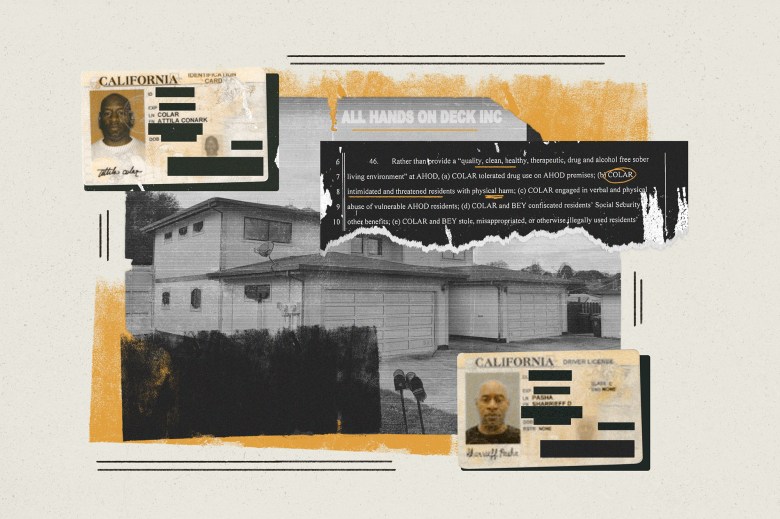
Three years ago a federal jury threw the book at a man who allegedly carried out a $1 million COVID fraud scheme while running a rehab home for parolees under a state contract.
Attila Colar’s conviction fell apart this week when the 9th Circuit Court of Appeals found the judge in the case allowed a juror with a disqualifying bias to participate in the trial.
CalMatters exposed Colar’s operation, called All Hands on Deck, in a 2023 investigation into parolee rehabilitation programs. The investigation showed California had spent hundreds of millions of dollars on the programs, but couldn’t say whether they helped anyone find a job or stay away from crime.
Colar, who is Black and Muslim, represented himself during parts of his trial. He made statements to prospective jurors suggesting he believed he was unfairly targeted by law enforcement because of his race and religious beliefs.
One juror reacted negatively to those statements, saying when Colar spoke, “all that came out was discrimination, conspiracy theories, and police corruption.”
The 9th Circuit found the juror should have been removed. The appeals court noted the man’s views “were rooted in his personal experience and emotion, and he told the court in plain terms that he would not be able to set them aside.”
What to do with leftover school AC money

California is sitting on $200 million once earmarked for school air conditioners and heating systems — and a fight is underway to claim it, writes CalMatters’ Alejandra Reyes-Velarde.
On one side, schools say they should get the money. It was meant for them, after all, when lawmakers created a program in 2020 to pay for HVAC replacements with money raised from utility companies.
- Keith Butler, deputy superintendent of Torrance Unified School District: “This was money that was pulled back unjustifiably. This is a good use of funds that has been set aside already — we just wanted it to go back out to finish the work.”
But, consumer advocates have a claim on the money, too. They say the money should go back to the utility ratepayers whose bills increased for a program the state killed.
A $340K transition for campus president

Tomás Morales, the outgoing president of California State University, San Bernardino, will secure a $340,000 salary from Cal State as he transitions to another job consulting for the university system. Morales was at the center of a $12 million lawsuit settlement, in which two female former administrators accused him of gender-based discrimination and retaliation. Read more from Phoebe Huss of CalMatters’ College Journalism Network.
California Voices
CalMatters contributor Jim Newton: The future of Los Angeles’ MacArthur Park is still tenuous, but it feels safer and cleaner than it did a year ago, and city officials are experimenting with limiting access to a major street in the middle of the park to only pedestrians and park-goers.
Other things worth your time:
Are CA voters signaling tax fatigue toward school bonds and parcel taxes? // EdSource (free)
San Francisco supervisors question Kaiser’s use of AI in healthcare // KQED (free)
Gig economy workers depend on food stamps and Medicaid, according to government report // The Washington Post (gift link)
3 years after mass shooting, Half Moon Bay voters to weigh in on farmworker housing // San Francisco Chronicle (gift link)
CA’s displaced oil and gas workers’ fund is a lifeline. Now advocates say it’s time to expand // KQED (free)
One of CA’s oldest schools changes name to comply with state law // Abridged (free)
CA Dems blast FCC in KABC, KGO license reviews // Los Angeles Times (paywall)
A year of ICE raids in LA County has cost Latino businesses millions in revenue // LAist (free)