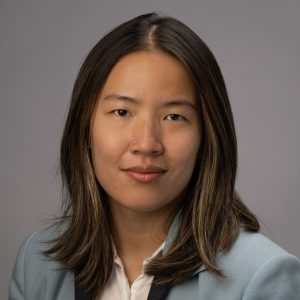
Maya C. Miller covers politics and government accountability for CalMatters, with one eye on the state Legislature and the other on California’s congressional delegation in Washington, D.C. She will help lead CalMatters’ coverage of campaigns, voters and elections in the run-up to the 2026 midterms.
Maya came to CalMatters in June 2025 by way of the New York Times, where she covered Congressas the David E. Rosenbaum fellow in Washington, D.C. She hit the 2024 campaign trail and delivered deeply reported stories from five different states across the country. From Nebraska, a deep red state, Maya introduced readers to an independent candidate –– a mechanic with no political experience –– who nearly unseated Republican Senator Deb Fischer after riding a populist wave. And in Maine, she showed readers how Representative Jared Golden, a three-term Democrat, persuaded Trump voters in his in his conservative-leaning district to split their tickets.
From the halls of the Capitol, Maya reported on how constituents overwhelmed the Congressional phone system shortly after President Donald J. Trump’s inauguration as outraged Democrats and energized Republicans tried to get the ear of their elected officials. She covered House Republicans’ herculean effort to pass Trump’s ambitious domestic policy agenda and also explained how the G.O.P. ‘s unprecedented repeal of California’s Clean Air Act waivers threatened to blow another hole in the filibuster.
Maya graduated from Duke University with a degree in public policy. She grew up in Des Moines and credits the Iowa caucuses with sparking her love for journalism and current events.
While lopsided polling and fundraising have given the Yes on 50 campaign an undeniable advantage, Gov. Gavin Newsom’s team is taking nothing for granted as Election Day arrives.
California Gov. Gavin Newsom has repeatedly warned, without evidence, that immigration agents could show up at polling sites the way they did at the launch for Proposition 50. Community members and local leaders say those fears are real.
It's common to see election observers at voting stations, but generally less so for them to come from the federal government. Some from the Trump administration will be on the ground in several California counties next month.
State Sen. Scott Wiener of San Francisco launched his campaign for former House Speaker Nancy Pelosi’s seat. His long–awaited announcement comes even as Pelosi demurs on whether she’ll retire or run for a 19th term.
Huntington Beach and its all-Republican city council have proudly led California’s conservative resistance. Now, if California voters approve Gov. Gavin Newsom’s plan to temporarily redraw the state’s congressional maps, the city would be represented by Rep. Robert Garcia, a gay progressive who leads Democrats on the House Oversight Committee.
Republican Rep. Kevin Kiley has garnered his most well-known Democratic challenger yet in Dr. Richard Pan, the former state senator who once made national headlines for going toe-to-toe with Robert F. Kennedy Jr. as California pushed to enforce school vaccine mandates.
The term “Proposition 50” doesn’t ring a bell with many residents of the rural San Joaquin Valley. But even some of the most disengaged voters say they’re familiar with Gov. Gavin Newsom’s push to redraw California’s congressional maps in response to Texas.
California congressional wannabes aren’t waiting for Prop. 50 to start campaigning in the newly drawn districts. Candidates are evaluating which seats they stand the greatest chance of winning in. For Republican challengers, the eight-week delay is far more consequential.
After weeks of tense and messy negotiations, California’s legislative leaders finally released several proposals that range from expanding domestic crude oil production to lowering electricity rates. But the biggest barrier was the reauthorization of the state’s cap and trade program.
Maya C. Miller covers politics and government accountability for CalMatters, with one eye on the state Legislature and the other on California's congressional delegation in Washington, D.C. She will help lead CalMatters' coverage of campaigns, voters and elections in the run-up to the 2026 midterms. Maya came to CalMatters in June 2025 by way of the New York Times, where she covered Congress as the David E. Rosenbaum fellow in Washington, D.C. She hit the 2024 campaign trail and delivered deeply reported stories from five different states across the country. From Nebraska, a deep red state, Maya introduced readers to an independent candidate –– a mechanic with no political experience –– who nearly unseated Republican Senator Deb Fischer after riding a populist wave. And in Maine, she showed readers how Representative Jared Golden, a three-term Democrat, persuaded Trump voters in his in his conservative-leaning district to split their tickets. From the halls of the Capitol, Maya reported on how constituents overwhelmed the Congressional phone system shortly after President Donald J. Trump's inauguration as outraged Democrats and energized Republicans tried to get the ear of their elected officials. She covered House Republicans' herculean effort to pass Trump's ambitious domestic policy agenda and also explained how the G.O.P. 's unprecedented repeal of California's Clean Air Act waivers threatened to blow another hole in the filibuster. Prior to the New York Times, Maya reported for The Sacramento Bee, where she resurrected the dormant state worker beat, reported closely on contract negotiations and pioneered a newsletter that informed more than 250,000 civil servants in California. She has also reported for The Seattle Times, the Minnesota Star Tribune and the Des Moines Register. Maya graduated from Duke University with a degree in public policy. She grew up in Des Moines and credits the Iowa caucuses with sparking her love for journalism and current events. Languages spoken: Spanish (conversational)